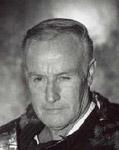
Is Aikido a Martial Art? Sensei Henry Ellis - 2001 This article ... appeared in 3 parts on the ... website. It is here ... in its ... PART 1 At first sight of the above title

Is Aikido a Martial Art?
Sensei Henry Ellis - 2001
This article originally appeared in 3 parts on the Cyberkwoon website. It is here published in its entirety.
PART 1
At first sight of the above title I am sure that a lot of Aikidoist's will be angry, they will assume that this is yet another attack on the credibility of Aikido by other martial artist's.
On this occasion they are totally wrong, I have been a student of Aikido since 1956, In those early days I first started Judo in 1955 at the Kenshiro Abbe School of Budo, I studied Karate with Harada Sensei and Kendo with Tomio O'Tani Sensei, so with my background I feel that I have something to offer to this debate.
First Impressions
The Aikido that I first saw being demonstrated by Abbe Sensei in 1956 was without doubt a positive martial art.
I was immediately impressed by its positive techniques and power, and in those days my fellow martial artists and I were in no doubt that we were witnessing a devastating new form of self-defence as demonstrated by Kenshiro Abbe Sensei.
Abbe Sensei had begun his martial arts career at the age of five and became a legend in his own lifetime. At eighteen he was the youngest ever all Japan Judo champion and also the youngest ever 5th Dan at the world renowned Kodokan. He later became the oldest ever all Japan Judo champion at the age of thirty three.
When Abbe Sensei arrived in the UK in 1955 he was 8th Dan Judo, 6th Dan Karate, 6th Dan Kendo, 6th Dan Kyudo, 6th Dan Aikido,
the question must be asked; would this Budo master have studied Aikido if he did not believe it to be a martial art?
It is my opinion that Abbe Sensei would not have studied Aikido as it is today.
Please break my finger
As a direct student of Abbe Sensei I asked one day whilst we were traveling to a seminar
"Sensei, how did you first become a student of O'Sensei and Aikido"?
He smiled as he reminisced for a few moments; then told me the following story:
He said that he was a young man at the time and the Judo champion of all Japan and traveling on a crowded train across Japan to yet another Judo competion.
Sitting opposite him in the same carriage was an old man who was trying to make some conversation with him, Abbe had his eyes closed as he tried to sleep.
The old man said to him " I know who you are" Abbe Sensei replied rather modestly " everyone knows who I am, I am Kenshiro Abbe champion of all Japan" he politely asked the old man who he was, the old man replied
"I am Morihei Ueshiba founder of Aikido" Abbe Sensei nodded politely and suggested that they now try to get some sleep, the old man suddenly stuck his hand forward and offered the smallest digit to this powerfully built young man, Abbe was stunned as the old man said "
please break my finger" Abbe thought I will break his neck if he doesn't go to sleep, he was now becoming irritated by this old man, he immediately grasped the old mans finger in an attempt to shut him up, he freely admitted that in his frustration it was his intention to break the offending digit. To his total amazement he was suddenly slammed onto the carriage floor. As he lay prostrate and unable to move he knew he had to study with this master. He asked O'Sensei if he could study with him, O'Sensei agreed and Abbe stayed with O'Sensei for ten years.
O'Sensei had spent many years studying various martial arts, I believe that the art of Daito-ryu and Ju-jitsu had more influence on the development of Aikido than anything else he had studied, and we know he went to Mongolia to fight and this would be the perfect opportunity to test his many skills in a real situation, so we can be in no doubt that this incredible man was a true warrior and modern Samurai.
A knife for my enemy
It was this early positive style of Aikido that Abbe Sensei brought to the UK in 1955, at this time there was also the first Japanese master to Europe, this was Tadashi Abe Sensei 6th Dan who was based in France, he was a small man even by Japanese standards, but to my mind he was the hardest man I have ever met.
He was very similar to Kazuo Chiba Sensei who I met with in London's West End last week, When he traveled he always carried a knife with him, this was not for his own protection but to hand to his shocked opponent, he would say "please, this is for you".
He said that an opponent with his bare fists was no challenge, but a man with a knife was "very interesting".
I think we can safely assume that as these teachers were so hard and positive then this must have been the style of Aikido that was being taught at the Hombu dojo in Japan, this was the Aikido of O'Sensei as a young man, the Aikido being taught today is that of O'Sensei as an old man, there is no doubt that as people get older they lose the spirit of their youth and become more philosophical in their approach to life.
My father who was once regarded as the toughest man in town later in life found his peace taking his dog for long walks. I believe that we now have two aikido's, traditional aikido which if truly traditional (this word is much abused) is the martial side of Aikido, the soft fantasy and dancing style of Aikido should simply be categorized as an "Art".
Those who are true traditional Aikidoists will take no offence at this article, yet the dancers will probably be offended and I care little for their feelings as I honestly believe that this soft Aikido has no more right to call itself a martial art than has synchronized swimming has a right to be in the Olympics.
--------------------------------------------------------------------------------
PART 2
In my previous article, I attempted to establish the hard style of Aikido that was first introduced to the West in the 1950's. I would like to emphasize the fact that I get no satisfaction from publicly criticizing Aikido and I get a great deal less satisfaction when I see Aikido being brought into ridicule.
To continue from part one.....
Hard training
The training in and exercises in those early days were very hard and physical, with karate style kicking and punching a very integral part of our warm up, followed by 200 press ups on the backs of the wrists, with fingers pointing both inwards and outwards, very often while you were in the raised position Abbe Sensei would instruct another student to sit on your back, as we were the only group of five Dan grades in the UK and all in the same dojo then this was the training in all the Aikido dojos in the UK and today we are the only organization in Aikido still doing these press ups.
The purists say "these press ups are bad for you" what they really mean is they can't do them, this is all part of the watering down of traditional Aikido.
Choreography
Aikidoists are often accused of practicing " Choreographed Aikido" and to be honest I must admit that these claims are very often justified, with Uke (attacker) preparing to break fall long before he makes his attack, and most of them attack off balance , therefore making any multiples of techniques possible with the minimum of effort and of course this makes Tori (defender) look "fantastic".
What is really sad is that these people believe that this is good Aikido.
Kenshiro Abbe Sensei would always say to us that "two" students are training at the same time, one is Uke who is learning and improving his attacking techniques and his
opponent Tori is also learning and improving his defensive techniques, whilst we were training with Abbe Sensei if Uke's foot or heel came off the mat as he attacked Abbe Sensei would give the offending leg a good whack with a shinai (bamboo sword) he would then say " My English is very bad but my shinai speaks fluently!".
If Uke attacks on balance then it is obvious that Tori's technique must be good and strong to throw him, and as Abbe Sensei said so many times " two students are training" .
Mark Eastman a strong young Dan grade with me went on a seminar recently where there was a 6th Dan. The 6th Dan refused to use him as Uke stating " I can not use you as you do not harmonize with me", he was not being awkward or difficult just attacking on balance

KyuShinDo is not a Martial ARt
Kenshiro Abbe Sensei and his lifes dedication to the study and philosophy of KyuShinDo. The sites are the very popular ` KyuShinDo Blog ` and the ` Kenshiro Abbe Blog `. It has taken a great deal of effort to collate the history and facts that we trust will one day be of benefit to future generations who will see through the fog of fraudulent claims by so many of some kind of association with Kenshiro Abbe Sensei in what can only be an attempt to gain some form of credibility.
Unveiling the British Aikido Board Controversy: A Former Executive's Confession
In a stunning turn of events, a former executive of the British Aikido Board (BAB) has come forward with a confession that sheds light on internal disputes and alleged misconduct within the organization. This revelation has prompted calls for all members of the BAB and Sport England to take notice. The controversy, which has been simmering since 2004, involves accusations of false claims and the mishandling of complaints by the BAB leadership. The apology, issued in August 2009, has been accepted by Henry Ellis, one of the last British Aikido pioneers, but the issues raised continue to resonate within the Aikido community.
British Aikido Board - Respect & Disrespect
15th/May2007: Today I received a large package from Mrs Pat Woods, the daughter of my old friend William `Bill` Woods who sadly passed away last year. I opened the package to a gold mine of material from as far back as 1952. Old newspaper cuttings / old and rare magazines. Photos of Abbe Sensie and Otani Sensie and many others.