


In 2014, diamond analyst Paul Zimnisky warned that Marange, then the world’s largest diamond producer by carats, might not remain so long. Over a decade later, Zimbabwe’s diamond sector shows mixed outcomes. This comparison explores whether Zimbabwe met Paul’s expectations for production, value, and long-term mining potential.
In his article Marange May Not Be The World’s Largest Diamond Producer For Much Longer, Paul documented how the Marange diamond fields produced about 17 million carats in 2013. That output represented roughly 13 % of global supply by volume — a major contribution for Zimbabwe.
Paul explained that the deposit was unusually shallow and alluvial, meaning diamonds were easy to recover with light, low-cost equipment. This alluvial nature allowed rapid initial extraction but hinted at a short resource lifespan compared to deep pit and underground mines.
Critically, Paul noted that most economic resources could deplete quickly and that mining deeper conglomerate rock would require expensive, advanced equipment. Many operators were unwilling to invest, risking production decline.
He also flagged governance and trade concerns. Due to historical human rights and export sanction issues, Marange diamonds traded at a discount and faced barriers entering key markets like the U.S.
This analysis set expectations that Zimbabwe might struggle to sustain production and economic value over time.
Since 2014, Zimbabwe’s diamond production has fluctuated. Marange did not sustain the 17 million carat peak for long. Production dropped as easy alluvial deposits were exhausted. Official data and industry estimates suggest volumes have decreased significantly since the early 2010s.
Mining deeper conglomerate zones, warned by Paul, proved costly and technically challenging. Some operators slowed operations or closed entirely rather than invest in advanced equipment.
Zimbabwe has also shifted mining governance structures. Over the years, companies were replaced or consolidated under state-linked corporations to improve control. However, these changes have not fully stabilized output or increased investment.
Marange thus moved from being arguably the leading diamond producer by volume to a lesser role. Larger, long-life mines in Botswana and Russia now dominate global output in both volume and value.
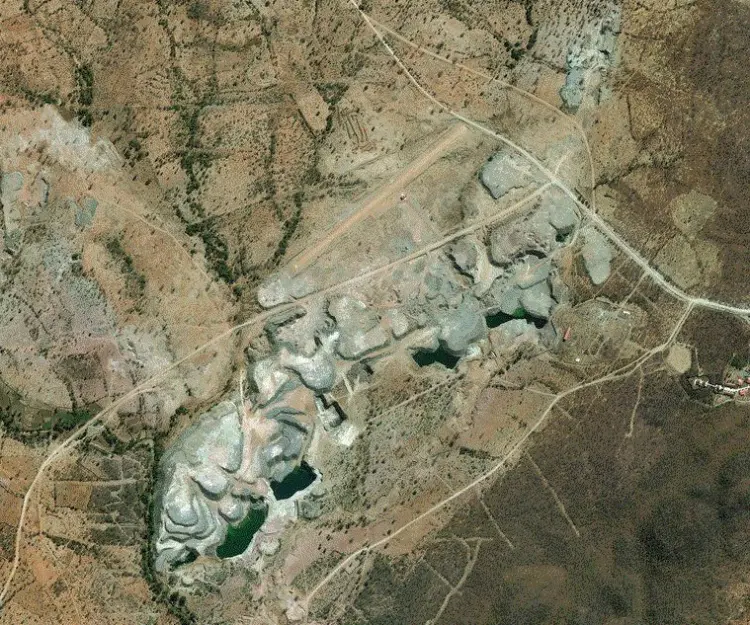
Image: Aerial view of Marange diamond fields illustrating widespread alluvial mining. Photo: satellite imagery
One of Paul’s key concerns was that Marange diamonds traded at a discount due to quality and sanctions issues. That remains true today. Zimbabwean rough diamonds tend to be smaller and lower value than many of their peers.
The average price per carat of Marange rough typically falls well below the global average, partly because many stones are suited only for industrial use.
Production also faced export challenges. While some sanctions, like those from the European Union, were lifted to revive trade, restrictions and reputational issues persist. These factors limit Zimbabwe’s access to high-value markets.
Global diamond benchmarks such as the De Beers Group’s production and sales reports show continued strength in traditional, deep-mine operations, contrasting with Zimbabwe’s struggles.
Market conditions outside Zimbabwe make comparisons even starker. For instance, Botswana’s Orapa and Jwaneng mines continue to supply tens of millions of carats at higher quality and steadier prices, reinforcing the relative challenges facing Zimbabwe’s diamond producers.
Paul’s original analysis touched on structural governance risk without extensive socio-economic data. Over time, criticisms have grown regarding how Zimbabwe’s diamond revenue benefits citizens. Many local communities, including villagers in drought-affected regions near Marange, report little improvement in living standards despite abundant resources.
Reports highlight failures to deliver promised infrastructure, health, and education investments. Some analysts describe this as a form of “resource curse,” where wealth extraction does not translate into broad economic benefit.
Despite government initiatives to increase oversight, transparency remains limited. The ongoing need for institutional reform echoes Paul’s early concerns about governance and reporting.
Looking back, Paul Zimnisky’s 2014 assessment of Marange proved prescient in many respects. His projection that Zimbabwe might soon lose its status as the world’s largest diamond producer by volume has come true.
Production volumes declined as alluvial deposits depleted, and deeper mining proved harder and costlier than anticipated. Market access and value challenges remain, aligning with Paul’s warnings.
However, Zimbabwe has made some progress in structuring its mining sector and attracting auctions in global hubs. While the diamond industry has not delivered the broad economic transformation hoped for, it continues to play a key role in the country’s mining landscape.

Best Canadian Stores for Suspension Lift Kits – Top 5 Picks
Looking for suspension lift kits in Canada? Discover the best online stores with quality parts, fast delivery, and trusted brands.
Why Players Buy Valorant Boosting, Reasons and Benefits
If you’ve ever wondered why players buy valorant boosting, it usually comes down to time, consistency, and access to higher-quality ranked games, not a single universal “shortcut” motive. In simple terms, Valorant boosting is a service by Eloboss where Radiant boosters handle rank progression, placement matches, and net wins through duo queue or account-based boosting, depending on the player’s preferred method.
Forget the Basic Tent and Enjoy Your Holidays at a Resort-Style Camping in Spain
Modern camping lets you take in Spain's breathtaking scenery without compromising hotel luxuries. This improved experience is rethinking what camping really means, whether it's on the Mediterranean shore or in verdant rural settings.


