Water filters are essential in today's world due to increasing contamination from industrial activities and centralized water storage. This article delves into various types of water filters, their mechanisms, and their effectiveness in providing clean, safe drinking water.
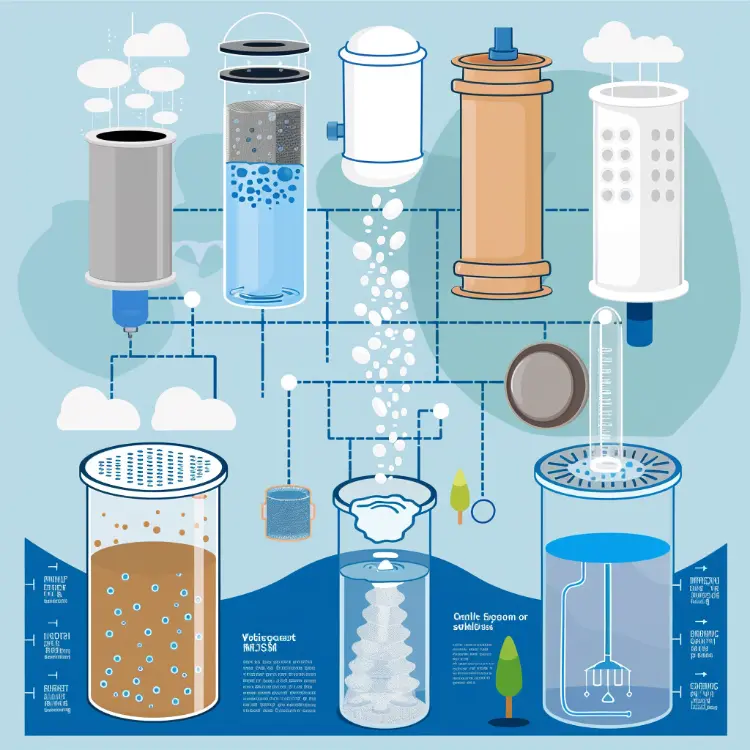
Water filters have become indispensable due to rising contamination levels from industrial activities and centralized water storage. This article explores various types of water filters, including carbon filters, distillation-based filters, ceramic filters, and reverse osmosis systems. Each type has unique features and benefits, making them suitable for different water purification needs. Learn about their mechanisms, effectiveness, and the importance of essential minerals in drinking water.
Water in its natural state undergoes a continuous cycle, starting as precipitation and moving through streams, absorbing essential minerals along the way. These minerals are vital for life and are absorbed by living beings when they drink water. Eventually, water returns to the earth and the sea, where it evaporates and the cycle repeats.
While natural water is pure, industrial contamination and centralized water storage have made it challenging to find clean water. Water filters are necessary to make water safe for human consumption by removing contaminants and ensuring it is absorbable by the body.
Carbon filters are among the most common and affordable water filtration systems. They work by absorbing contaminants as water passes through them. Some carbon filters use coconut husk-derived charcoal as the filtration medium. These filters can effectively remove many dangerous contaminants and typically last for six to nine months. Activated nano-silver can enhance their effectiveness.
Pros:
Cons:
Distillation-based filters purify water by boiling it and then condensing the steam back into liquid form, leaving impurities behind. This method is highly effective in removing contaminants, but it also removes essential minerals, which can impact the body's mineral balance.
Pros:
Cons:
Ceramic filters are often used in countertop water filtration systems. They contain Diatomaceous Earth, a fossilized substance made from the shells of diatoms, which are algae that have existed for over 150 million years. The porous outer shell of ceramic filters is often impregnated with nano-silver to protect against bacteria.
Pros:
Cons:
Reverse osmosis systems use a fine membrane to filter water, making it drinkable by removing contaminants. The process involves applying pressure to unfiltered water on one side of the membrane, forcing clean water through while leaving impurities behind. Although highly effective, the process can be time-consuming.
Pros:
Cons:
Water filters play a crucial role in ensuring access to clean and safe drinking water. Each type of filter has its unique advantages and limitations, making them suitable for different needs. Understanding these differences can help you choose the right water filtration system for your home, ensuring you and your family have access to pure, healthy water.

Water FIlter Aspects Before Purchasing to Consider
Various aspects of water filtration to consider before purchasing.
How Using a Whole House Water Filter Can Effect Your Family
The Benefits of using a whole house water filtration system for the health and wellness of your family.
Healthful Benefits of Using a Shower Filter
Explaining the importance of a shower water filtration system