


Many topics that surround caring for children that can cause raised eyebrows and uncertainty like sleep training. Although everyone wants their child to sleep better, many caregivers and parents worry about doing it "wrong", or maybe starting too early, and even causing emotional distress to the child. Sleep training is a learning process that needs time, patience, and understanding as you built their sleeping habits while still making sure to address their emotional and developmental needs.
In its essence sleep training is all about teaching your little one to fall asleep independently and how to return to sleeping in between cycles. Developing this skill can reduce frequent night wakings, improve their daytime mood and allows the entire household to rest better as well. Many parents worry of messing up with their child's sleeping routine and trying out sleep training, but this could be a rather positive experience when done thoughtfully and consistently.
At earlier stages, there are tools that helps parents with soothing their little ones like rocking, holding or even using an infant swing at daytime when they find sleep difficult to come by. Although these tools can be helpful in regulating their mood and bringing comfort, being able to practice sleep training can shift your little ones towards self-soothing especially during the night. Knowing when and how to begin with sleep training is your first step towards success.
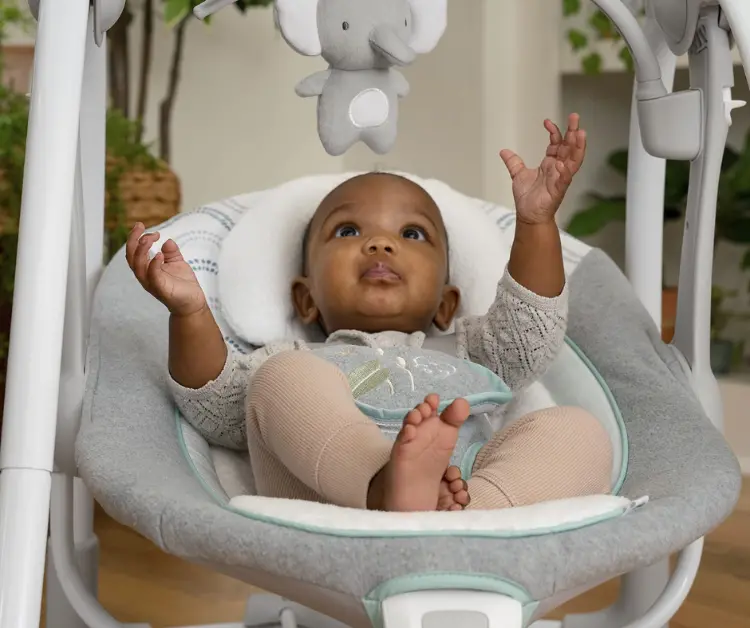
The success of your sleep training endeavors can rely on a lot of factors; this includes their readiness for this transition. By the ages of 4 - 6 months, babies are often expected to be developmentally ready for sleep training since their sleep cycles are continuously maturing and longer stretches of sleep are also possible. At the earlier months babies rely on multiple feedings even at night that could cause night wakings and more of their parent's comfort to get to sleep which is why sleep training could be inefficient at this point. It could also possibly just stress you and your baby out.
There are telling signs that your baby can be ready for their sleep training. This includes,
It's also important that parents themselves are ready to enter sleep training phase with their little ones. This will test your emotional steadiness, consistency and commitment to providing them support in sleeping more independently. If you expect travels, major changes, illness or developmental leaps happening, it's best to wait it out until life feels more stable.
There are a lot of approaches that you could do when sleep training and none of these are really universally "correct." The best one will depend on which one works and aligns well with your parenting values and your baby's preferences.
For some families gradual methods like chair-based approaches or timed check-ins, where parents slowly reduce their presence at bedtime works better than those more direct techniques that involves allowing some brief crying moments while offering reassurance at a set interval.
Gentler methods can take longer but they feel more emotionally forgiving and comfortable for many parents. Compared to the gentler approach, the structured approach produces faster visible results, but it requires a stronger consistency in training. But regardless of the method, the goal of sleep training remains the same, being able to help your baby learn how to fall asleep independently.
Another factor that sets you to succeed with sleep training, is establishing a calming and predictable sleeping environment. Babies are highly sensitive to light, sounds, and temperature, all factors that influences their sleep quality.
Other factors like having the room darker helps in regulating melatonin production, a consistent white noise background can mask household sounds that can cause unnecessary wakings. Have your room at optimal temperature and dress your little ones appropriately depending on the season.
Using the same sleep space and routine consistently is equally important, as babies learn through repetition, and a familiar environment signals that indicates that it's time for rest and sleep. When paired together with a consistent sleeping routine, their sleep environment becomes a powerful cue that supports a healthy independent sleep.
Predictable bedtime routine is your ultimate secret weapon in sleep training. Routines help babies transition from being stimulated to winding down and resting, this then reduces the bedtime resistance.
Simpler routines work best, setting a calm sequence of activities like bath, feeding, gentle cuddles, and bedtime can be set as clear signals that sleep is coming. The order of these activities matters more than its consistency. Going over the same steps, every night helps build the strong association of the routine activities and sleep.
Putting your little ones down drowsy but still awake lets them practice self-soothing in a way that they don't have to rely on external soothing. When they're able to self-regulate and self-soothe, you're laying a great foundation of their sleep training.
Common causes of sleep struggles more than the developmental changes are the mistimed sleep rather than sleep training issues. Tracking their wake windows proves important at this point when sleep training.
Wake windows are the amount of time when the baby is comfortably awake between sleeps or naps. If the baby is put down early, it can cause sleep resistance since they're still too active to sleep. Now if they're overtired, falling asleep and staying asleep could also prove difficult when getting that sleep.
The four to six months age stage, the typical wake window of a child ranges from 1.5 to 2.5 hours. Upon stepping into month 8 these wake windows extend to 2.5 to 3 hours with daytime naps affecting the nighttime sleep. It's important to establish a balance in between daytime rest and nighttime sleep.
Managing emotions is considered one of the hardest parts of sleep training, both for the baby's and the parents. There are times when you hear your little one's cry, even for a short period, can cause so much distress in your part. But it's important to remember that frustration doesn't immediately equals harm.
Babies often express change through protest and this is a normal part of learning any new skill for them. What matters here is how consistent you are to sticking to sleep training and the routine they need to learn. Mixed signals like straying away from your routine and picking them up against the scheduled calming time can cause confusion which results to prolonged sleep training process. Practice supporting them with calm reassurance and maintain clear boundaries to keep them safe, and over time, as their sleep improves, both you and your baby will benefit from this emotionally.
When it comes to your sleep training, night feedings might be something that will pose as a challenge to you, particularly if you're taking care of a younger baby. However, when they reach 4 to 6 months old, although there are babies that can sleep through the night, many babies will still need to be breastfed during the night.
Now incase that your child still prefers having night feedings, try to keep these sessions calm and boring, avoid turning lights on, or engage them in play while awake. Feed, soothe briefly, and return your baby to bed while they are still awake.
And with time, gradually, those nighttime feedings can be reduced with pediatric guidance. The goal is to unlink feeding from falling asleep, so your baby won't rely on feeding as their primary sleep association which is extremely helpful when self-soothing and sleep training.
Disruptions can happen anytime and even with successful sleep training it can prove to be challenging to get them into the routine again. From developmental milestones, illness, travel, and sleep regressions, they can temporarily affect your sleeping patterns. Whenever setbacks happen, push through in getting back to your already established routine as soon as you can. As we've discussed earlier, babies thrive on predictability, and familiar cues that they have linked to sleep, getting them back to routine in a timely manner can help them re-learn their sleep skills quickly.
Travel requires flexibility, but how consistent you are in bedtime rituals can ease these rather challenging transitions. It would be helpful to bring familiar sleeping items like pillows or blankets and maintain similar schedules to reinforce the habits they have learned during sleep training.
When you're sleep training, you're not forcing independence to your little ones. You're guiding them towards a healthier sleeping habits. When you're in the middle of this transition and want to practice sleep training, gather up all your patience, empathy, and be consistent so that sleep training won't turn into a struggle.
Every baby is different in their own way and what progress looks like from one baby to another is also different. Acknowledging small improvements matter, temporary setbacks could happen. But when you're focusing on their readiness, routine, and being responsive to their needs and cues, you parents can build a sleep foundation that supports their growth, development and reinforce emotional security for the coming years.

Planning Your Wisdom Tooth Removal? Here’s the Cost in Singapore (2026 Guide)
Planning a wisdom tooth removal often raises one important question: how much will it cost? In Singapore, wisdom tooth extraction remains one of the most frequently performed dental procedures, yet many patients feel uncertain about pricing, treatment options, and what they are actually paying for.
What impacts the institutional adoption of Bitcoin and altcoins in 2026?
Institutional adoption is growing every day, and in 2026, it will continue to grow. So, it is expected that professionals across industries, such as managers, brokers, and fintech, will seize this opportunity, especially since the market now offers them the chance through proper regulation, robust market infrastructure, and high liquidity.
5 Signs It’s Time to Replace Your Old Sofa With A New One
There comes a point in every sofa’s life when even the comfiest cushions and the coziest throws can’t hide the truth: it’s just not what it used to be.


