


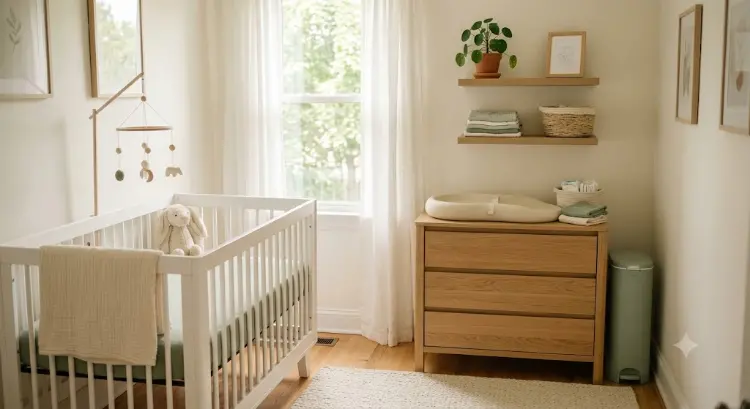
Setting up a nursery in a small apartment or cozy bedroom requires careful spatial planning. While parents often focus on fitting the crib, changing table, and glider into a tight layout, they frequently overlook one of the most significant challenges of small-space parenting: managing diaper waste. In a large home, a faint draft might disperse unpleasant odors, but in a compact nursery, a single forgotten diaper can quickly compromise the air quality of the entire room.
Investing in a reliable Momcozy odor locking diaper pail is one of the most effective ways to maintain a fresh environment without sacrificing valuable square footage. Implementing an intentional strategy for diaper disposal system placement, maintenance, and ventilation ensures your baby’s room remains comfortable, hygienic, and inviting.
To effectively manage nursery smells, it helps to understand why small spaces are uniquely vulnerable to odor accumulation.
In a small bedroom, the total volume of air is significantly lower than in an open-concept living area. When organic waste breaks down, it releases volatile organic compounds (VOCs) and gases like ammonia and hydrogen sulfide. In a confined space, these gases rapidly reach a high concentration, making odors noticeable almost immediately.
Small rooms, particularly those in older apartments or converted spaces, often suffer from stagnant air. Without consistent cross-ventilation from multiple windows or a robust HVAC system, airborne odors settle into fabric surfaces, carpets, and wall coverings, making them much harder to eliminate over time.
In a compact nursery, the dirty diaper storage area is inevitably located just a few feet away from where your baby sleeps, plays, and feeds. This close proximity means that even minor leaks in your waste management routine can disrupt your baby's sleep environment or make late-night feedings unpleasant for caregivers.
A standard kitchen trash can is entirely inadequate for handling infant waste in a small room. Standard lids allow a large volume of air to escape every time the can is opened, creating a "puff" of foul air that can linger for hours. Dedicated diaper pails utilize distinct engineering mechanisms to isolate waste.
When evaluating a diaper trash pail for a compact nursery, prioritize the following design features:
The performance of your diaper pail is directly tied to the containment material used inside it. Standard thin-gauge grocery bags or basic kitchen garbage liners are highly porous on a microscopic level. Over several hours, gas molecules easily permeate the thin plastic, allowing odors to bleed into the room.
High-quality diaper pail refills are engineered using advanced multi-layer barrier films. These specialized plastics are designed specifically to stop the transmission of highly localized odors. Some lines incorporate modern odor-neutralizing compounds or subtle scents directly into the plastic matrix to help manage ambient smells without overwhelming sensitive infant respiratory systems.
For a small nursery, a continuous ring refill system is often highly practical. This design allows you to cut and tie off the bag at any size. Instead of waiting for a massive bag to fill completely—which can lead to severe odor accumulation over a week—you can easily empty a smaller bundle of waste every two to three days without wasting an entire standard trash liner.
Proper spatial layout is an absolute necessity when dealing with limited square footage. Where and how you position your changing station directly influences your daily workflow and your ability to control drafts.
Avoid placing your diaper pail directly next to a heating vent, radiator, or in the path of direct, intense sunlight. Elevated temperatures accelerate the decomposition of organic material, rapidly increasing gas pressure inside the container and forcing odors past seals. Instead, tuck the pail into a cool, shaded corner, ideally near a window where localized ventilation can be utilized during routine bag replacements.
Keep your dirty diaper storage physically accessible from the changing pad but positioned low enough that it does not crowd your immediate workspace. A streamlined workflow reduces the risk of accidental drops or prolonged exposure of an unsealed diaper to the open air.
Even the most advanced diaper pail odor control systems require regular cleaning to prevent long-term odor absorption into the structural materials of the pail itself. Over time, micro-particles can collect on interior surfaces.
Every time you completely remove a full refill bag, leave the empty pail open for ten to fifteen minutes near an open window to allow any trapped moisture to evaporate. High humidity inside the canister is a primary driver of mold and severe bacterial souring.
Monthly Deep Cleaning
Set aside time once a month to wash the interior and exterior of the pail.
Relying solely on a trash container is rarely enough in a highly confined space. Implementing a multi-layered defensive strategy keeps the entire room smelling neutral.
It depends entirely on the design of the unit. Some models feature flexible adaptive collars that allow the use of standard kitchen garbage liners, which can save money over time. However, in small nurseries where diaper pail odor control is critical, specialized multi-layer refills generally offer superior gas retention compared to standard household bags.
Even if your pail has the structural capacity to hold a week's worth of waste, it is wise to empty it every two to three days when living in a small space. Frequent disposal minimizes the total volume of organic waste decomposing inside the room and prevents pressure buildups that cause odors to leak when the lid is opened.
If the room smells even after emptying, the plastic walls of the pail may have absorbed odor molecules, or moisture may have collected at the bottom of the canister. A thorough cleaning with warm water, mild soap, or a vinegar-and-water solution, followed by completely air-drying the unit in direct sunlight, usually remedies this issue.
Yes. Wrapping the dirty diaper tightly into a ball and securing it firmly with its own adhesive tabs minimizes exposed surface area. This reduces the immediate release of gases inside the pail and helps keep the interior walls clean.
Managing dirty diaper waste in a small nursery does not have to be an ongoing battle against stale air and unpleasant smells. By combining a reliable, dedicated diaper disposal system with deliberate habits—such as wrapping diapers tightly, utilizing advanced multi-layer refills, and maintaining a regular cleaning schedule—you can keep a compact space smelling fresh. Focus on keeping the unit cool, ensuring proper ventilation, and managing waste frequently to create a clean, healthy, and comfortable room for both you and your baby.

Own Damage Insurance for Two-Wheelers: Coverage, Benefits & Claims
Owning a two-wheeler offers convenience for daily commuting, short trips, and personal travel. However, accidents, theft, and unexpected incidents can result in significant repair or replacement expenses.
Seedance 2.5 AI Video Generator: What It Actually Changes About Content Production
The demand for video hasn't plateaued. If anything, it keeps going up — more platforms, more formats, more publishing frequency, more audience expectations around visual quality. For most content teams and independent creators, the production side of that equation hasn't scaled at the same rate.
The Cost of Procrastination: How Routine Scaling Saves Your Teeth and Wallet
It is so easy to cancel a dental hygiene appointment when life gets busy. When your calendar is jam-packed with work commitments, family events and personal errands, postponing that simple cleaning for a few months seems totally innocent. If your teeth don't hurt and if your gums look reasonably healthy in the bathroom mirror, it's easy to convince yourself that delay doesn't really matter.


