Passwordless Accounts: Where Your Account Goes
In times past, signing up for something was a bit like a ritual: pick a username, type in an email, invent a password, confirm it, wait for the verification message. That routine is fading, because more services will happily log you in through your bank, a device you already trust or a passkey. Great for your patience: no password to forget, no reset email to chase. It also gets a little strange if you stop to think about it. If you never registered, where did the account come from?
Contributed article
Key takeaways
- 01Passwordless accounts separate authentication from registration, simplifying the sign-in process.
- 02Passkeys use public-key cryptography to authenticate users without traditional passwords.
- 03Nordic instant casinos use bank authentication to create accounts without conventional sign-up forms.
- 04Accounts reside in provider databases, with authentication services verifying identity.
- 05Recovery processes for passwordless accounts require careful design to ensure security.
Inside this article
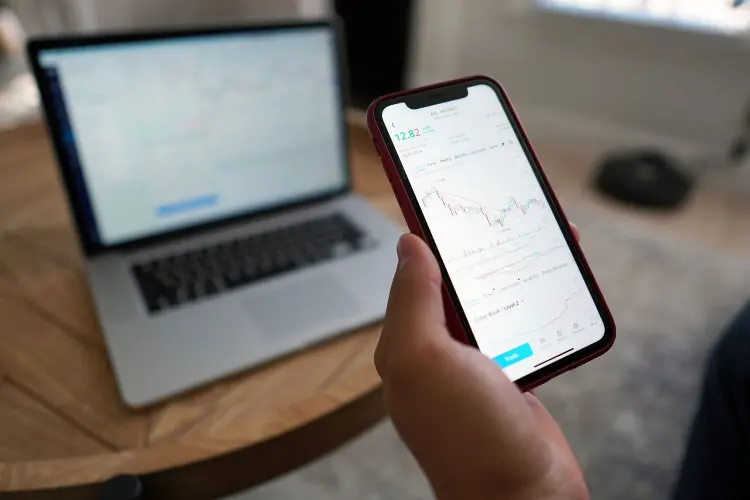
Start by separating two things that used to travel together. An account is a record a company keeps, holding your contact details, preferences, purchases and activity history. A username and password are credentials for reaching that record. Take the credentials away, then the record stays exactly where it was.
Authentication and registration are two different jobs
Old-school registration bundled everything into one form: personal details, profile, credentials, plus a way to prove you were the same person next Tuesday. Newer setups split that work up. Your bank or your phone vouches for you once, passes the confirmation along, with the service setting up your account in the background.
Three words matter here. Identification is who you claim to be. Authentication checks that you control the credential tied to that identity. Authorization decides what you can touch once you are in. None of it goes away when the username field does. You just see fewer steps, because the service coordinates identity checks with another provider for you.
Passkeys and the slow goodbye to passwords
Passkeys are the clearest working example. They run on public-key cryptography: a private key stays protected on your device or inside a synced credential system, then the matching public key is registered with the service. To sign in, your device proves it holds that private key, usually after you approve the request with a fingerprint, face scan or device PIN.
People are actually using them, too. The FIDO Alliance's 2026 State of Passkeys report estimates that five billion passkeys are in active use worldwide, with its research finding that 75% of surveyed consumers had enabled one on at least one account. Passkeys do not delete the account machinery, though. Businesses still manage customer records, permissions, device swaps and recovery.
Bank authentication, the Nordic way
Nordic pikakasinot, Finnish for "instant casinos", take this notion the furthest. They make this shift particularly visible by using bank authentication to confirm the user's identity and initiate a payment without a conventional sign-up form. The customer account has not necessarily disappeared; much of its creation and verification has simply moved behind the transaction.
You choose an amount, select a participating bank and authenticate within the bank's own service. A payment intermediary controls the transaction and hands the verified details to the operator, ultimately forming a player account on its side. The operator finishes up with a verified customer without ever skimming your banking credentials. You fill out less, as identity checks and regulatory obligations remain in place. Looking ahead, Finland's new gambling licensing system is scheduled to begin on July 1, 2027.
Where the account actually lives
Invisible or otherwise, the account generally resides within the provider's database or in infrastructure its cloud provider handles. An outside authentication service can provide evidence relating to your identity without becoming the proprietor of your account. Today, several organizations can assume a role in one sign-in, each assuming a different component within the process.
This stimulates intriguing questions about data and control: what details does the authentication provider transfer? What does the business retain, and how long does it keep transaction records? Different services collect different sorts of personal information, ultimately coming down to how they operate and what the law mandates. Before sharing your details, confirm what information the company collects, how it uses it and how long it holds it. In the US, companies must wade through privacy requirements, consumer protection rules and sector-specific regulations when they handle personal information.
Recovery, the part nobody tests
Today, undoubtedly, misplacing your phone or replacing a device is where passwordless access can grate. A conventional service can email a reset link and get you back inside without much issue. In contrast, a passkey account requires another route back in, with that potentially a synced credential, a backup device, recovery codes or a new identity check, usually relating to how the service was designed.
The National Institute of Standards and Technology approached this in July 2025, in its Digital Identity Guidelines. Its guidance outlines options like repeating identity checks, employing a prearranged recovery contact or delivering recovery codes before attaching a new authenticator to the account. Ultimately, recovery merits as much attention as the first sign-in, as weak recovery procedures give a potential cyber attacker a legitimate account.
Common questions
How do passkeys work?
Passkeys use public-key cryptography, where a private key is stored on your device and a public key is registered with the service.
What happens to my account if I lose my device?
Recovery for passwordless accounts may involve synced credentials, backup devices, recovery codes, or new identity checks.
Where is my account information stored?
Account information is stored in the provider's database or its cloud infrastructure, separate from the authentication service.